Product design for digital mental health
Creating connected experiences for healthcare providers and mental health patients.
.svg)
Project Overview
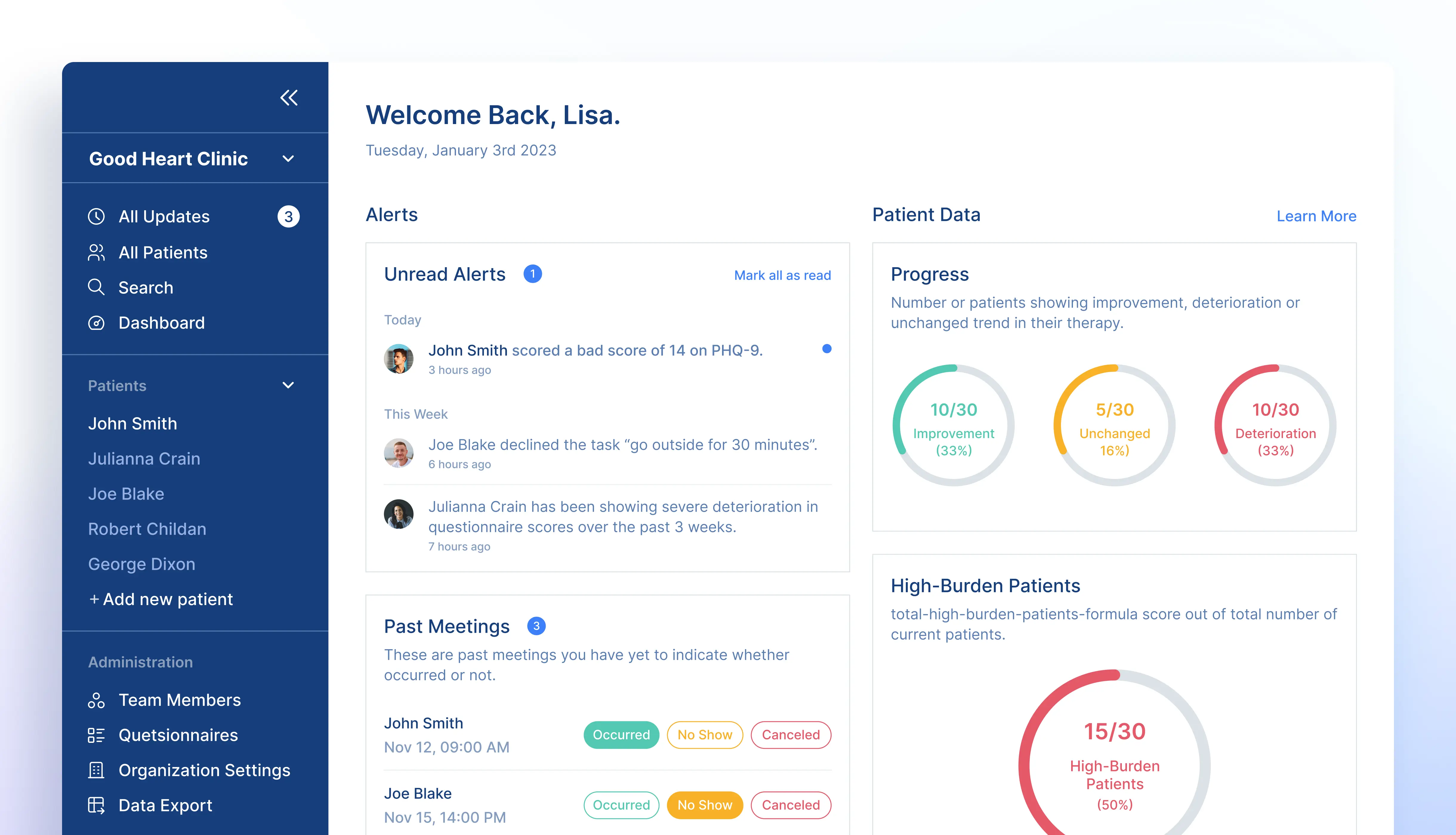
This digital mental health startup focused on building connected tools for healthcare providers and patients. The product included two distinct sides: a desktop experience for healthcare providers alongside a mobile app designed for patients going through therapy.
Over nearly two years of collaboration, we worked across both experiences to help expand the product, redesign core interfaces, and create clearer, more approachable user experiences tailored to very different audiences.
The Challenge
One of the biggest challenges was designing two connected products with completely different requirements and user expectations. The desktop experience needed to feel trustworthy, professional, and data-oriented, while the patient-facing mobile app needed to feel approachable, friendly, and emotionally accessible.
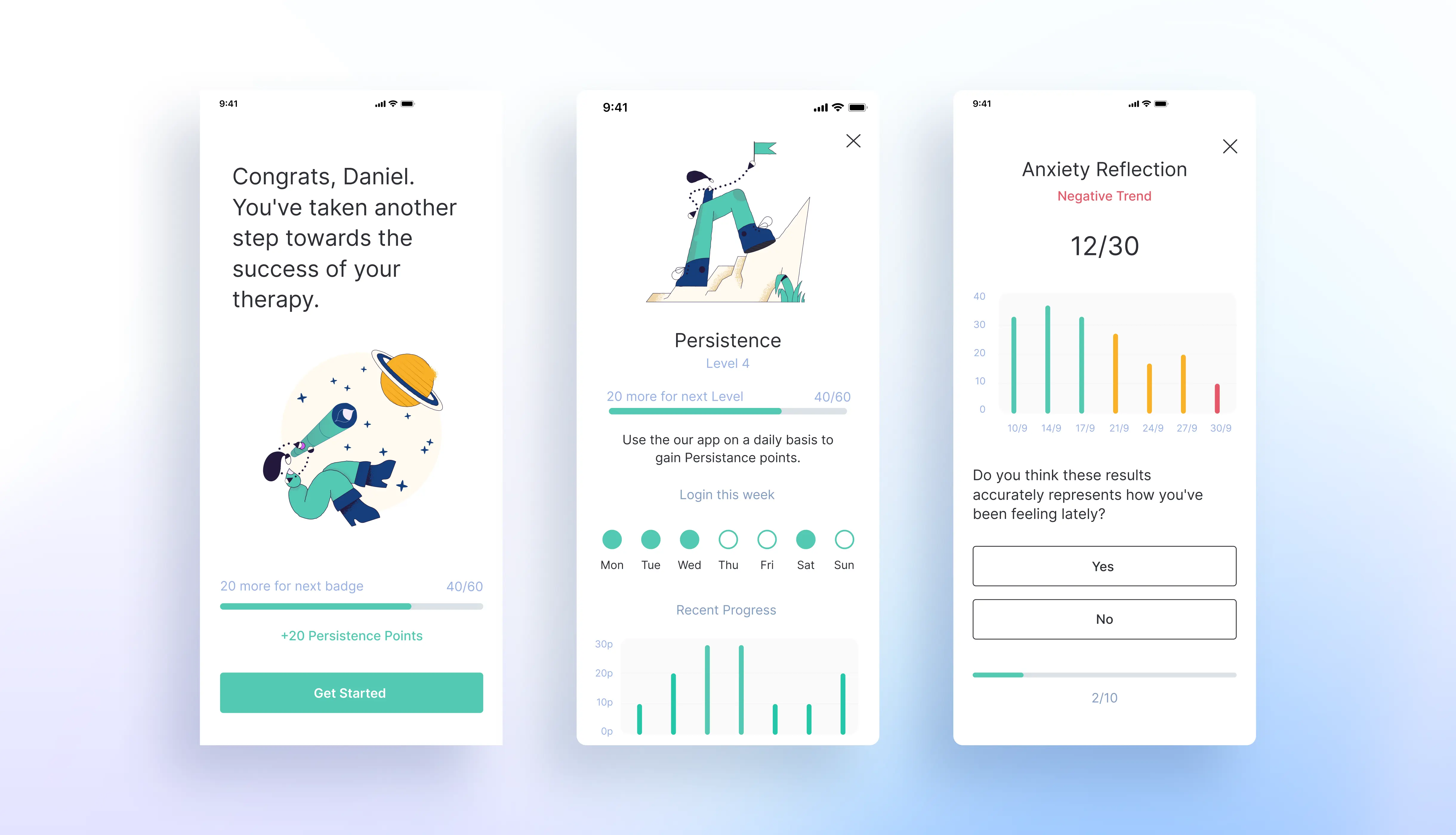
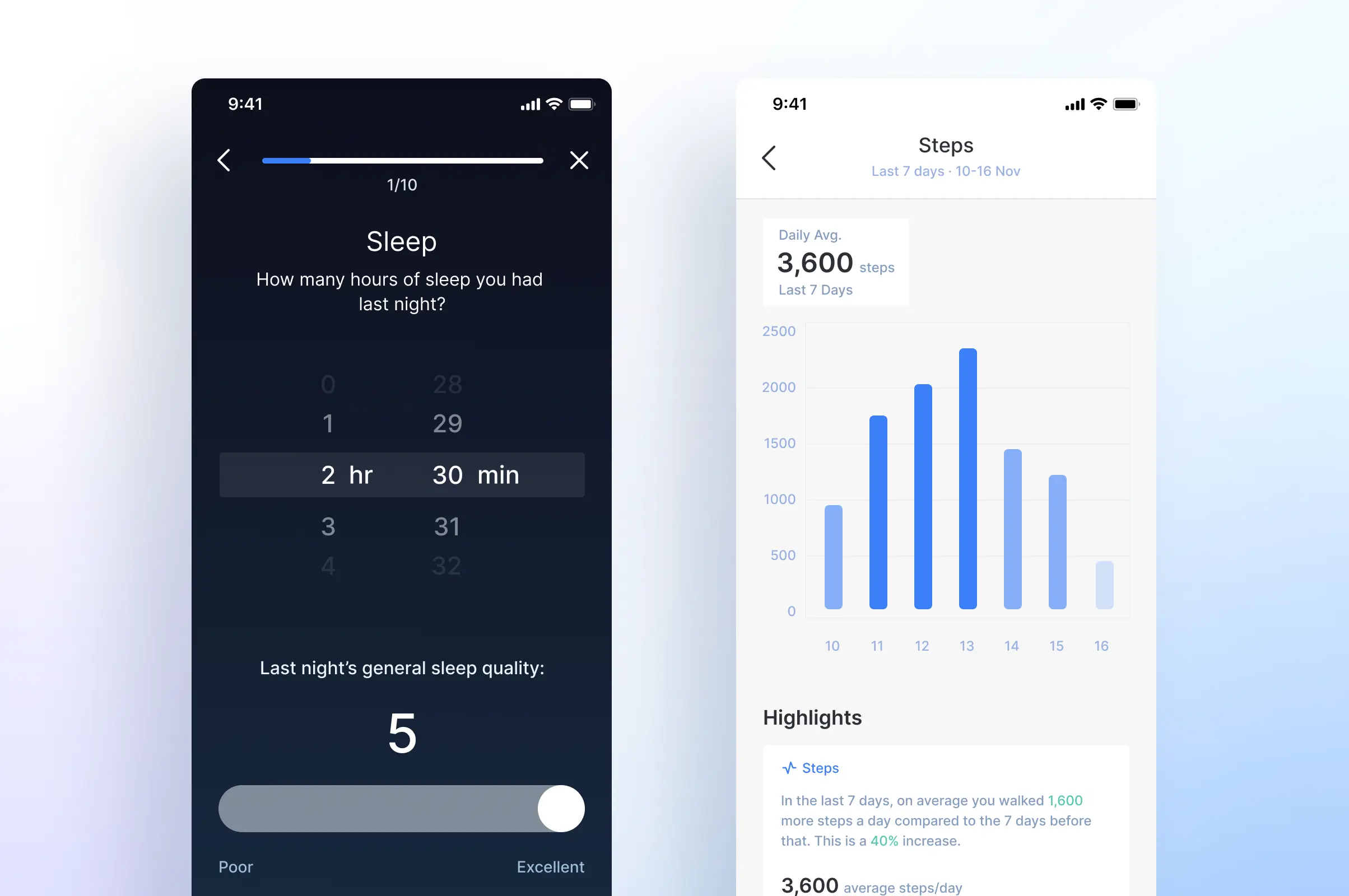
The patient experience presented a particularly unique challenge. Since engagement with the app was often tied to treatment processes rather than voluntary usage, the product needed to encourage ongoing interaction in ways that felt supportive rather than overwhelming. We explored gamification systems, progress tracking, and reward-based interactions to help improve engagement throughout the treatment journey.
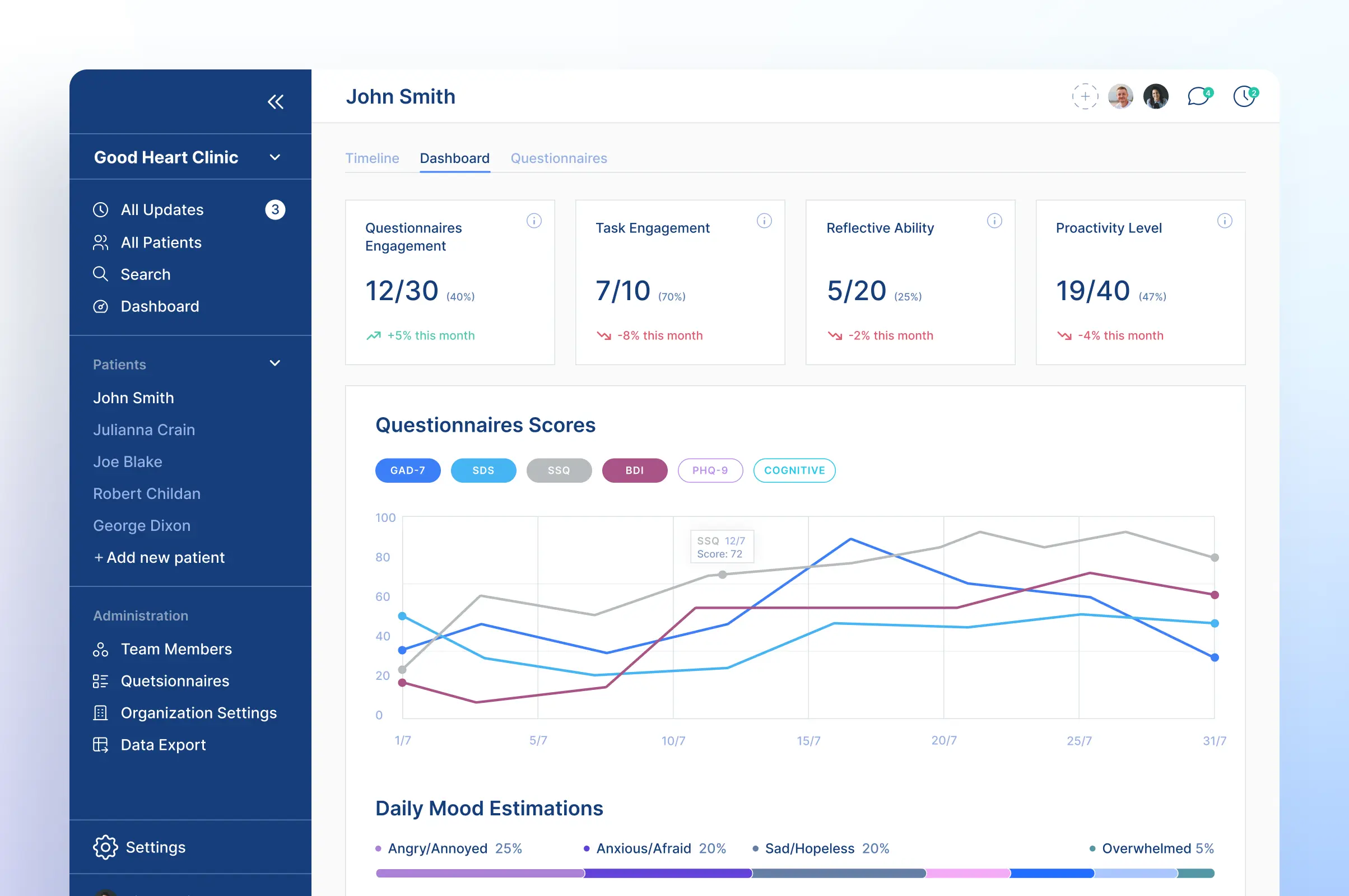
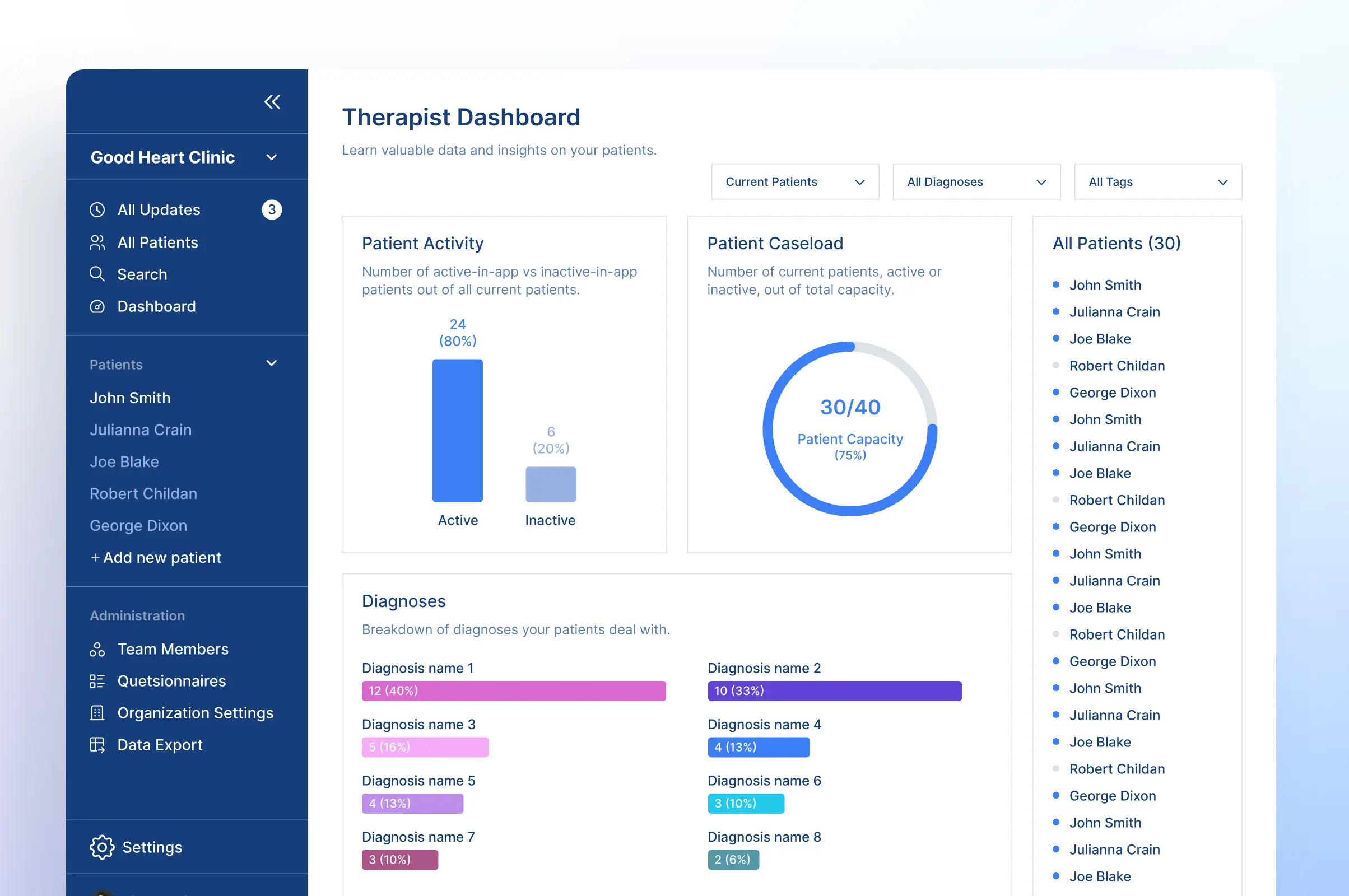
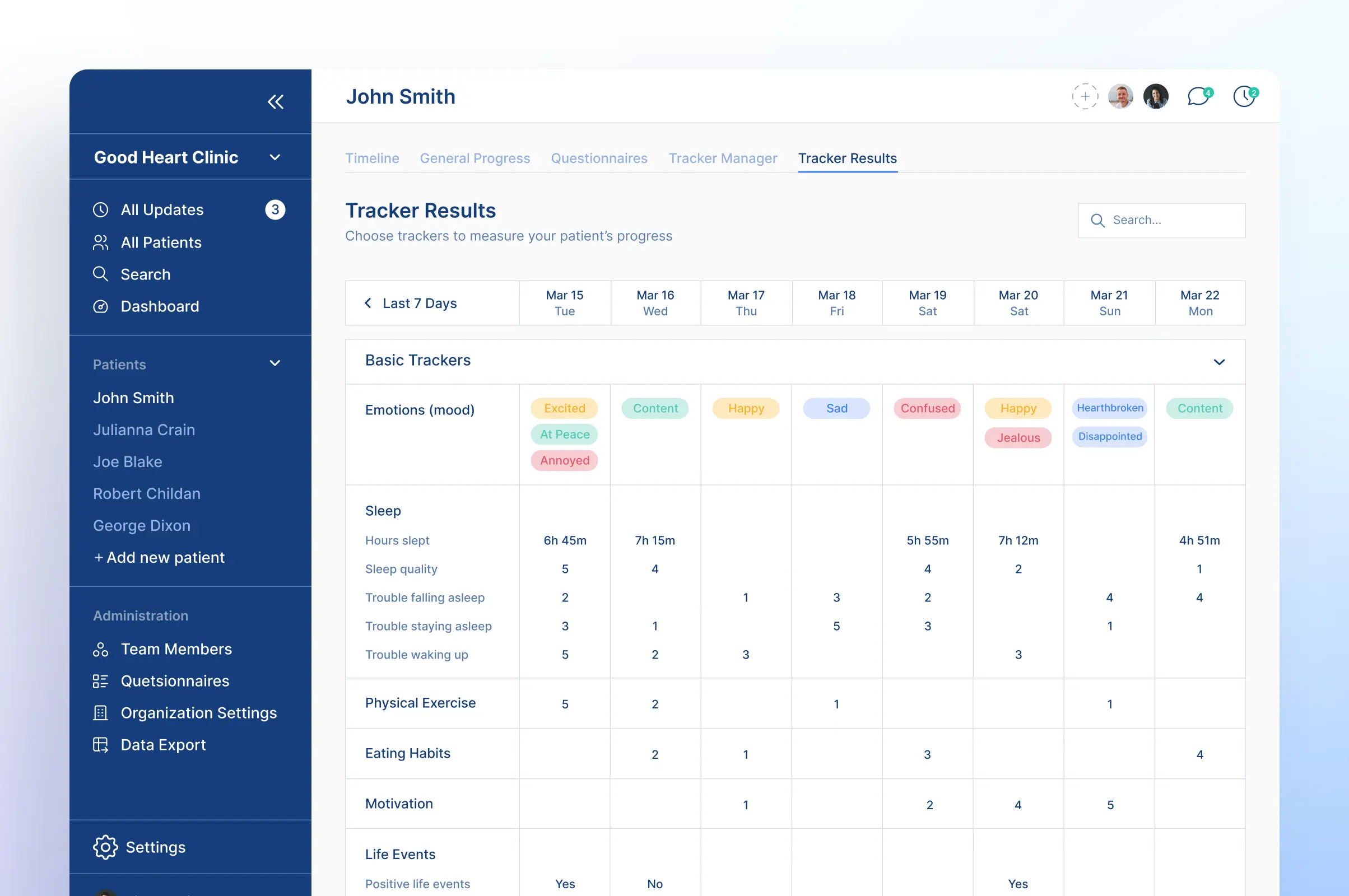
On the desktop side, the challenge centered around managing large amounts of connected patient information between both systems. Activities, questionnaires, and measurements completed through the mobile app needed to flow clearly into the desktop experience in a way that felt organized and actionable.
Our Approach
- Redesigned and expanded both the desktop and mobile product experiences
- Created separate visual directions tailored to professional and patient-facing audiences
- Designed gamification and engagement systems for the mobile experience
- Structured connected workflows between patient activity and care team monitoring
- Focused on making complex healthcare interactions feel clearer and more approachable
Design Process
For the desktop product, we focused on creating a serious and trustworthy interface language suited for healthcare professionals managing sensitive patient information and treatment workflows.
For the mobile app, the focus shifted toward accessibility, emotional clarity, and engagement. We created a cleaner and friendlier interface direction supported by illustrations, simplified interactions, and lighter visual structures designed to feel less intimidating for patients.
As the product expanded, we continued working closely with the client’s product and development teams to refine workflows, explore new features, and improve how information moved between both sides of the product.
Results
Over nearly two years of collaboration, the product evolved from an early-stage system into a significantly more robust and feature-rich experience spanning both desktop and mobile environments. The project helped establish clearer workflows, stronger visual foundations, and more connected experiences between patients and healthcare providers.
The implementation process involved close collaboration with the client’s product and development teams through recurring specification, handoff, and QA workflows. Alongside technical specifications, we provided detailed design walkthroughs and interactive prototypes that helped developers better understand functionality, interactions, and intended user flows throughout the product.