Product design for AI automation
Turning early technical concepts into structured product foundations.
.svg)
Project Overview
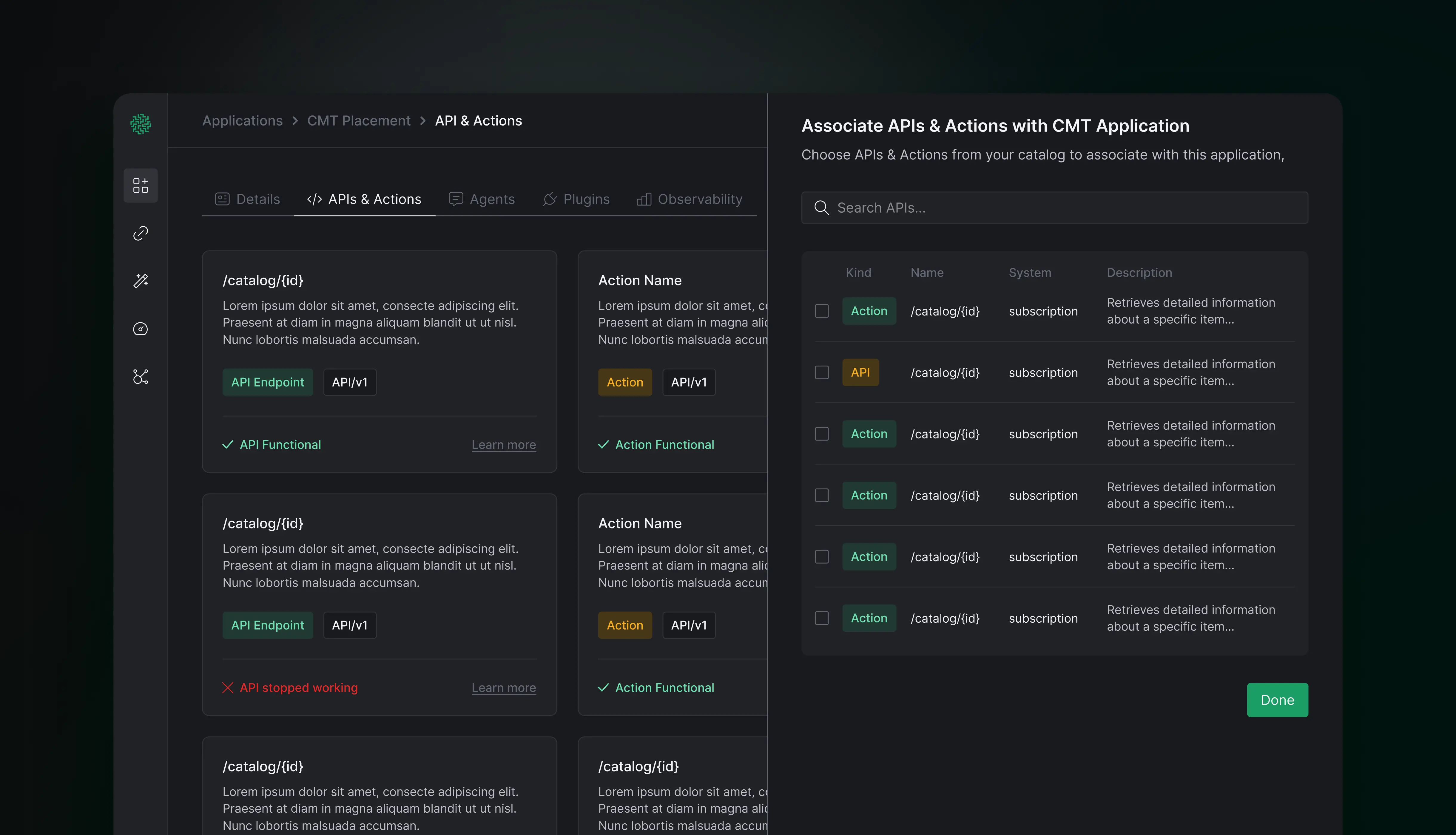
This AI automation startup focused on helping developers manage and orchestrate complex API workflows connected to modern AI systems and agents. We joined the company at a very early stage, working directly with the founders to help shape the product foundations, define core workflows, and turn highly technical concepts into tangible product experiences.
The Challenge
One of the biggest challenges was understanding a deeply technical product environment built around APIs, integrations, automation logic, and AI-driven workflows. The product introduced new ways of connecting systems and creating automated processes, requiring us to quickly understand complex developer needs, technical terminology, and operational workflows before meaningful product decisions could be made.
At the same time, the company was still in a very early exploration phase. Beyond designing interfaces, a large part of the work focused on identifying which capabilities, workflows, and product directions would provide the most immediate value for both users and early investor conversations.
Our Approach
- Worked directly with the founders to help define the product’s earliest workflows and capabilities
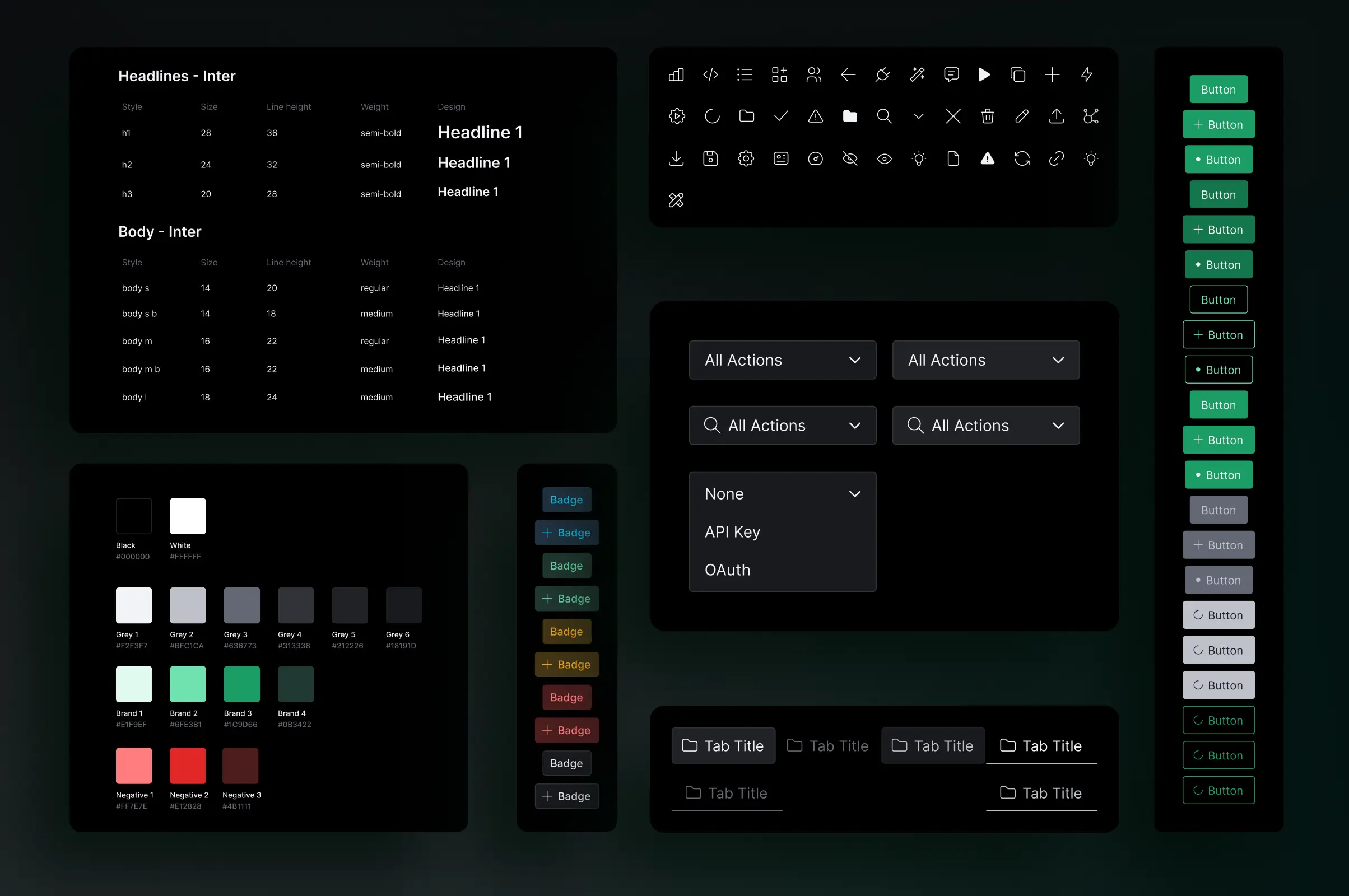
- Built the initial design system and core product structure from the ground up
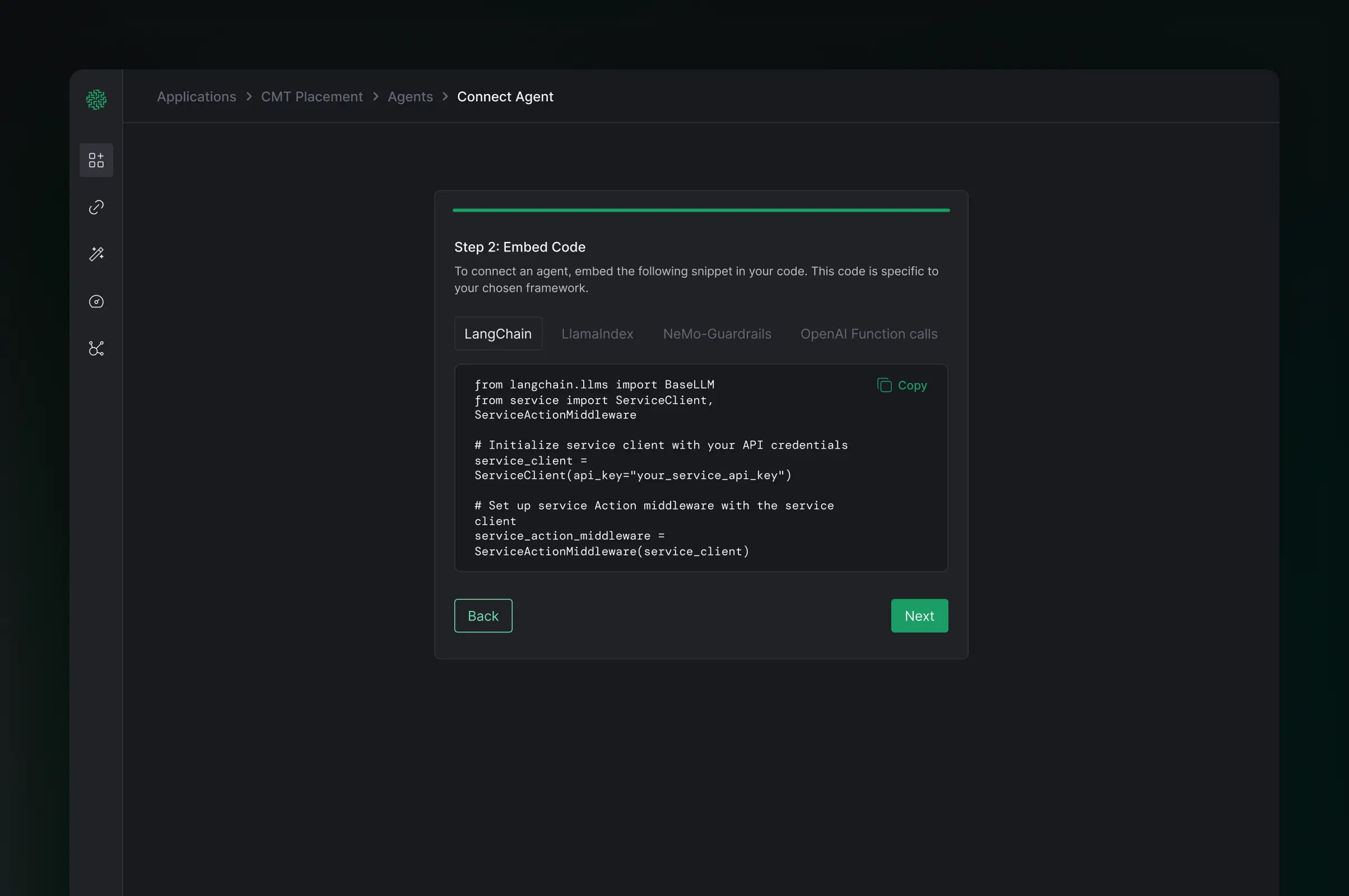
- Focused on translating highly technical functionality into structured product experiences
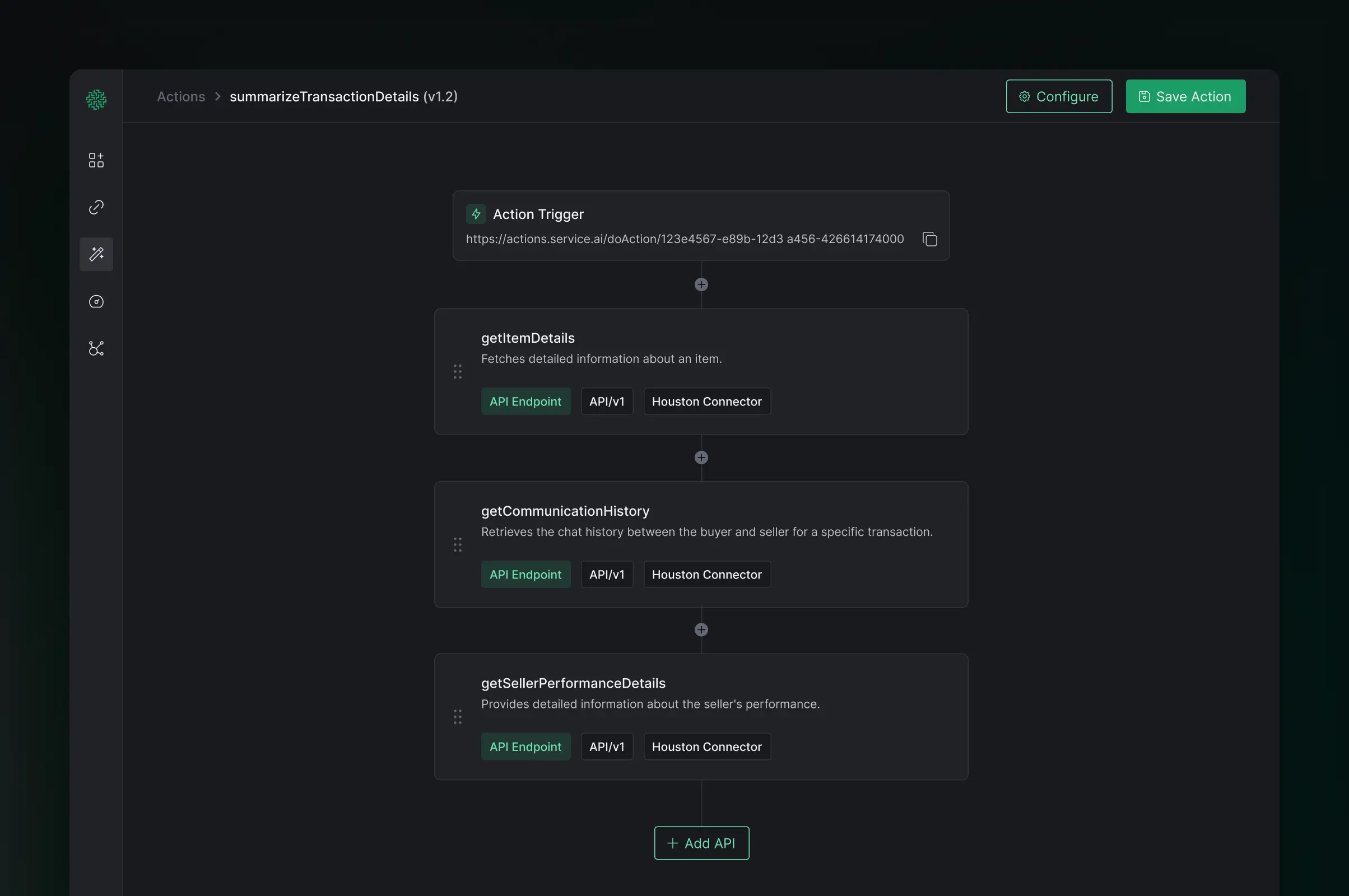
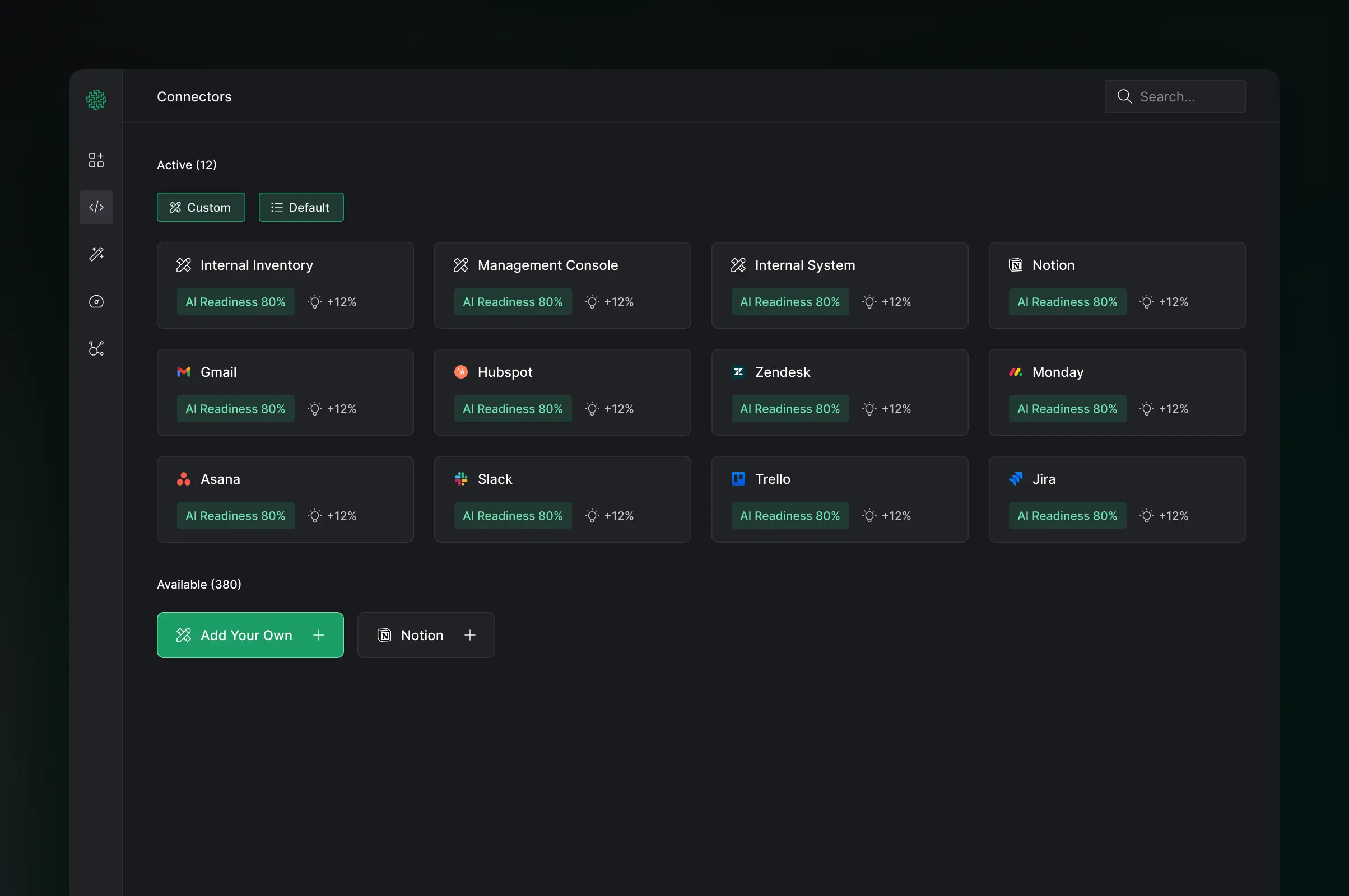
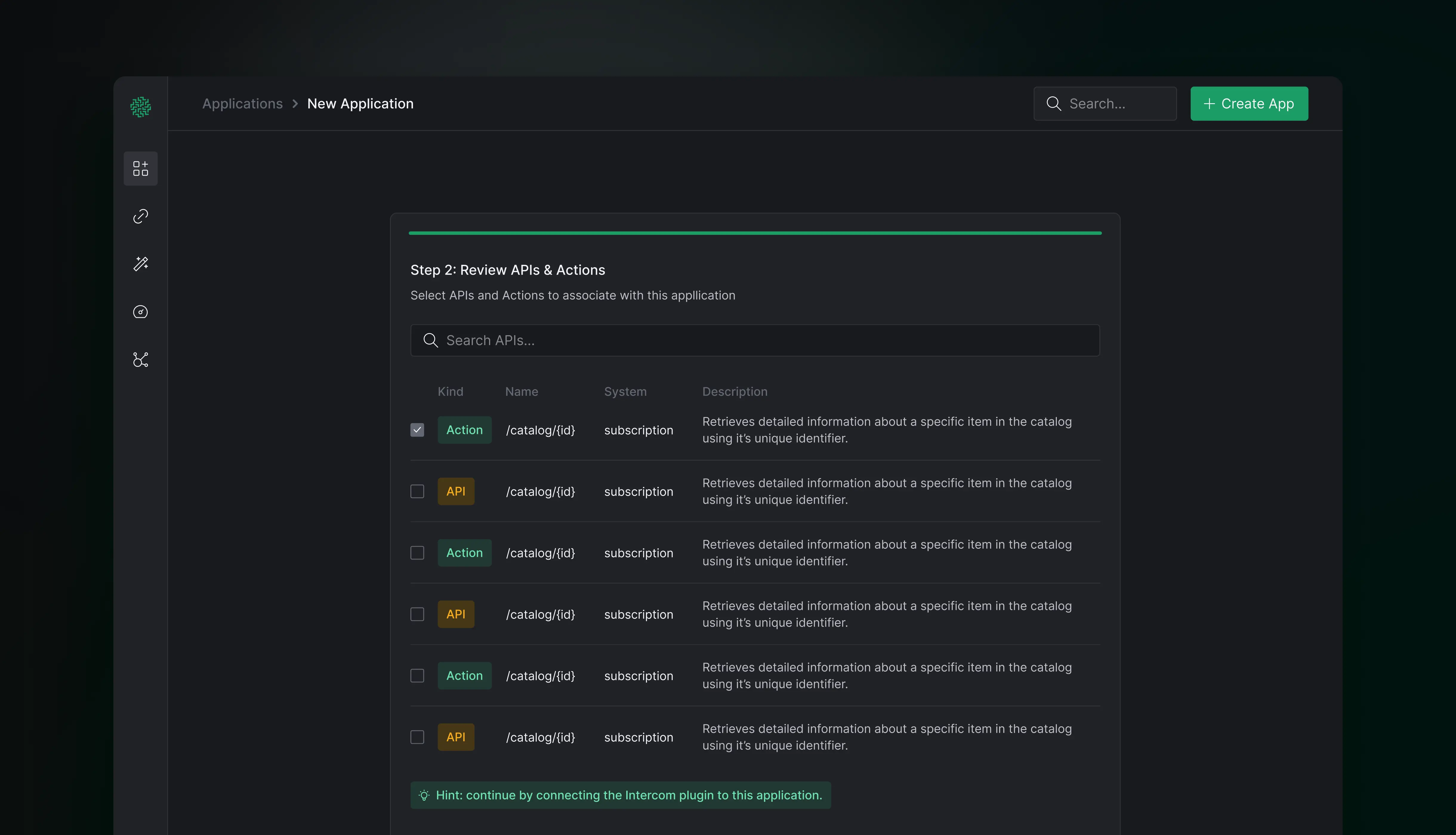
- Designed early product flows around developer-focused workflows and API interactions
- Created scalable UI foundations that could support future product expansion
Design Process
The process started with understanding the technical environment, the users, and the operational problems the product aimed to solve. Since the product introduced new approaches to API automation and AI workflows, a large part of the early work focused on identifying which features and product flows would communicate the clearest value to both users and investors.
From there, we built the first design system, interface direction, and core product screens around detailed technical documentation provided by the founders. The visual direction was designed specifically for a technical audience, while the product structure focused on making complex workflows easier to navigate and understand.
Results
The project transformed early concepts and technical ideas into structured product foundations that could be tested, expanded, and iterated on. What initially existed as technical logic and developer prototypes evolved into a clear product direction with working screens, core workflows, and a scalable design system that supported the company’s next stage of development.
The product was designed around reusable components, a scalable design system, and flexible UI foundations that could support future expansion and development.